
- Flooring
- |
- Rubber Flooring
Rubber Flooring for Hawaii Home Gyms and Lanais: What to Know Before You Buy
September 29, 2026
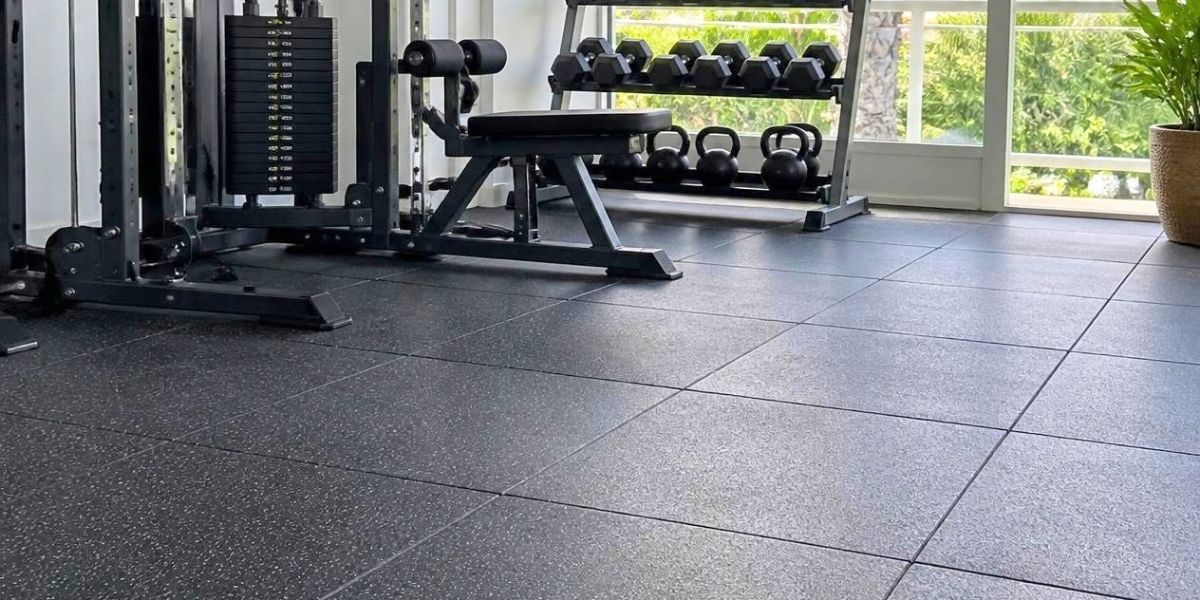
An Oahu homeowner converting a garage into a home gym ordered the same rubber rolls their mainland cousin used in a Colorado basement. Within a few humid weeks, the seams had lifted and a musty smell had settled in that no amount of scrubbing fixed.
The rubber wasn’t defective. It was the wrong rubber for this climate, and figuring that out before you buy is exactly what Bougainville’s in-stock gym rubber selection is set up to help with.
Key Takeaways
- Rubber flooring behaves differently in high humidity. Trapped moisture reacts with binders in lower-quality rubber, worsening odor instead of letting it fade.
- Interlocking rubber tiles allow airflow underneath, which matters far more in Hawaii’s humidity than in a dry mainland garage, where flat rolled rubber is less of a risk.
- Bougainville Flooring Super Store carries in-stock gym and commercial rubber suited to both indoor Oahu garages and covered outdoor lanais.
- Outdoor rubber for a lanai needs EPDM rubber flecks for UV resistance. Standard indoor SBR rubber degrades faster in direct island sun.
- Gluing rubber down in high humidity is one of the most common failure points, since moisture interferes with adhesive bonding.
Why Does Rubber Gym Flooring Behave Differently in Hawaii’s Humidity?
Rubber gym flooring behaves differently here because concrete slabs in humid climates “sweat.” Warm, moist air meets a cooler slab and forms condensation underneath the rubber, a phenomenon mainland guides rarely mention because dry-climate garages don’t experience it the same way.
That trapped moisture does two things. It can react with the binders in lower-quality recycled rubber, turning normal off-gassing into a musty or chemical smell that gets worse over time instead of fading. And it interferes with adhesive bonds, which is why gluing rubber rolls down in high humidity is a common cause of lifted seams and curling edges within the first year.
Pro-Tip, Bougainville Flooring Team: Garages in Salt Lake and Aliamanu with doors closed most of the day trap humidity the worst. If your garage gym stays closed up, interlocking tiles that let air move underneath will hold up noticeably better than a single rolled-out sheet.
Garage Gym or Covered Lanai? What Changes About Your Choice
The right rubber flooring depends heavily on which space you’re outfitting, and Honolulu homeowners increasingly ask about both.
For an enclosed garage, interlocking rubber tiles beat rolled rubber in humid climates. Tiles create a vented air gap under the surface that lets moisture escape instead of pooling, which meaningfully cuts down on the condensation and mold risk a closed-up garage creates.
For a covered lanai, UV exposure becomes the bigger concern. Even under a roof, indirect and reflected UV plus ambient heat still degrade standard indoor rubber faster than a fully enclosed room. Look specifically for rubber with EPDM flecks, which resist UV breakdown far better than plain black SBR rubber. Outdoor installs also need a slight drainage slope so rainwater blown in during a Kona wind event doesn’t pool and sit underneath.
“People come in wanting one rubber floor for a garage that doubles as a lanai gym in the evening, and honestly, that’s usually two different products. I’ll walk you through both so you’re not stuck replacing one of them in a year.”
Jessica P, Flooring Ambassador, Bougainville Flooring Super Store
“The flooring products they offer are excellent, and what complements this is their unwavering professionalism. The team member who assisted me was a very friendly and charismatic individual named Chase. He demonstrated great expertise and was able to provide alternative ideas when my initial concept was not feasible.”
Zevs S, Honolulu — General flooring purchase
What Actually Determines Whether Rubber Flooring Holds Up Long-Term Here?
Long-term performance comes down to three things that have nothing to do with color or thickness alone: the rubber compound, the installation method, and whether the space can breathe.
EPDM-flecked rubber resists UV and heat better than standard SBR recycled rubber, which matters most for lanai and any garage that gets direct afternoon sun through an open door. Interlocking tiles outperform glued rolls in humidity because they don’t trap moisture against the slab the way a full adhesive bond does. And a space with real airflow, whether from an open lanai or a garage door left cracked during workouts, will always outlast one sealed up all day.
Look for rubber certified low-VOC, sometimes labeled FloorScore certified, a standard developed by the Resilient Floor Covering Institute. It won’t eliminate the initial rubber smell entirely, but it meaningfully shortens how long it lingers in Hawaii’s humidity compared to cheaper recycled rubber with heavier binders.
“A lot of customers think thicker automatically means better, but for our climate I’d rather talk about whether it’s going to trap moisture than how many millimeters thick it is.”
Chase Fernandez, Flooring Ambassador, Bougainville Flooring Super Store
Living With Rubber Flooring in Hawaii’s Climate
Expect some rubber smell in the first few weeks no matter what you buy. In Hawaii’s humidity it lingers longer than the two-week mainland average, so plan on active ventilation, a fan pointed at the floor, and keeping the space uncovered as much as possible early on.
Clean with a pH-neutral cleaner rather than harsh degreasers, which can dry out and crack rubber faster in a hot, humid environment. If you notice odor getting worse instead of better after the first month, that’s a sign of trapped moisture underneath, not normal off-gassing, and worth pulling a section to check.
“Aloha! We recently visited and purchased some carpet here. We were greeted with amazing aloha from Ed Saunders. I really appreciated that he didn’t hover but was very much engaged and extremely knowledgeable and had an answer for our questions. We also appreciate the simple fact that he was personable and didn’t try to sell us something we didn’t need.”
DeLori M, Honolulu — General flooring purchase
How to Choose Rubber Flooring for Your Oahu Home Gym or Lanai
Ask these questions before you buy, whether you’re outfitting a garage, a lanai, or both.
- Is this rubber rated for outdoor UV exposure with EPDM flecks, or is it standard indoor SBR rubber being sold for outdoor use?
- Are interlocking tiles an option instead of glue-down rolls, especially for an enclosed garage?
- Is the product low-VOC or FloorScore certified, which shortens how long odor lingers here?
- For outdoor installs, has drainage been addressed so water doesn’t pool underneath during heavy rain?
Frequently Asked Questions
Ready to Feel the Difference in Person?
Bougainville Flooring Super Store (Hawaii Contractor License #BC-7137) carries in-stock gym and commercial rubber suited to Oahu’s garages and covered lanais alike, from its Malaai Street showroom in Honolulu. Stop by any day this week to see and feel samples of both EPDM outdoor rubber and interlocking indoor tiles before you decide. Call (808) 201-1250 or visit 4478 Malaai St, Honolulu, HI 96818, or request samples shipped to your door.
You Might Also Like

Ready to Upgrade Your Home?
From flooring to window coverings, we make it simple to transform your space — stylish, durable, and built to last.